Types of Therapy & Services: What They Are & How They Help
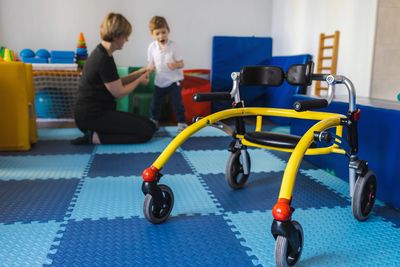
Families often hear terms like speech therapy, ABA, or occupational therapy — but understanding what each service actually does can make a big difference. Here's a clear breakdown to help you make informed decisions for your child:
Speech Therapy (ST)
What it is:
Speech therapy helps children with communication. This includes speaking, understanding language, social skills, and sometimes feeding.
Helps with:
- Articulation (saying sounds correctly)
- Language delays
- Stuttering
- Feeding/swallowing difficulties
- Social interaction (pragmatics)
- Evaluation and use of augmentative and alternative communication (AAC) tools
Often treat: Children with speech delays, autism, developmental delays, hearing loss, or cleft palate.
Occupational Therapy (OT)
What it is:
OT helps children develop the skills they need for daily life — including fine motor tasks, self-care, and sensory regulation.
Helps with:
- Handwriting and grasp
- Dressing, feeding, toileting
- Sensory processing (over- or under-reacting to sound, touch, etc.)
- Motor coordination
Often treat: Sensory processing disorder, autism, ADHD, and motor delays.
Physical Therapy (PT)
What it is:
PT focuses on helping children gain strength, balance, coordination, and mobility.
Helps with:
- Walking and running
- Sitting and standing balance
- Muscle strength and flexibility
- Orthotics or equipment use
Often treat: Cerebral palsy, Down syndrome, torticollis, and general motor delays.
Applied Behavior Analysis (ABA)
What it is:
ABA is a science-based therapy that focuses on improving social, communication, and learning skills through reinforcement strategies. Most often used with children on the autism spectrum.
Helps with:
- Communication
- Social and play skills
- Self-help tasks (dressing, brushing teeth, etc.)
- Behavior management and safety
- School readiness
In Arkansas ABA treats children with a qualifying Autism Spectrum Disorder
Developmental Therapy
What it is:
This therapy helps promote general development in young children by building skills across multiple areas of growth.
Helps with:
- Early cognitive and play development
- Social interaction
- Learning through everyday routines
Often used for: Children under age 3 receiving early intervention services like First Connections.
Behavioral Health Services
What it is:
Mental health services provided by licensed professionals like therapists or counselors.
Includes:
- Individual, group, or family therapy
- Counseling for anxiety, depression, trauma, etc.
- Psychiatric services and medication management
Often used for: ADHD, trauma, mood disorders, and emotional regulation challenges.